【評判】AI Engineering : Model Deployment, MLOps & Agentic AI
-

-
 本コースの特徴
 -
 受講生の声
受講生の声
講座情報
- ・講師名:FutureX Skills(詳しい経歴はこちら)
- ・作成日:2020-10-12
- ・レクチャー数:97
- ・週間:0記事
- ・月間:0記事
- ・年間:0記事
- ・全期間:1記事
レビュー数
レビュー数の推移
直近6か月以内に本講座のレビューに関して記載された記事はありません。
学習内容
Build AI Agents using OpenAI Agents SDK and Google's Agent Development Kit (ADK)
Develop AI applications using Scikit-Learn, TensorFlow, PyTorch, and modern Python tools
Master MLOps with MLflow, experiment tracking, model registry, and Databricks
Create multi-agent AI systems with memory, tools, workflows, and autonomous reasoning
Deploy AI applications using FastAPI, Docker, cloud services, and serverless architectures
Use GitHub Copilot and AI-assisted development to accelerate AI engineering workflows
Deploy NLP, computer vision, and deep learning models for real-world applications
Gain practical AI Engineering skills through hands-on projects from ML to AI Agents
詳細
AI Engineering is one of the fastest-growing fields in technology today.
From deploying Machine Learning models and building scalable AI APIs to developing LLM-powered applications, enterprise AI systems, and autonomous AI Agents, organizations across every industry are looking for engineers who can transform AI models into production-ready solutions.
In this course, you'll learn how to build, deploy, manage, and serve Machine Learning, Deep Learning, and AI applications using modern tools and industry best practices. Going beyond model development, you'll gain hands-on experience with the complete AI Engineering lifecycle—from experiment tracking and model management to deploying production-ready REST APIs and AI Agents.
You'll also learn how enterprise AI teams use Databricks for experiment tracking, model management, model versioning, and managed model serving, giving you practical experience with one of the world's leading AI and data platforms.
The course introduces modern AI Engineering concepts including Large Language Models (LLMs), OpenAI SDK, OpenAI Agents SDK, Google ADK, AI Agents, MLOps, Databricks, MLflow, GitHub Copilot, Claude Code, Vibe Coding, and other emerging technologies shaping the future of software development.
Course Structure
Machine Learning Model Deployment
Build Classification Models using Scikit-learn
Save and Load Machine Learning Models
Export Models across Environments
Build REST APIs using Python Flask
Deploy Machine Learning APIs on Cloud Virtual Machines
Build Serverless Machine Learning APIs using Cloud Functions
Deep Learning Model Deployment
Build and Deploy TensorFlow and Keras Models
Deploy PyTorch Models
Convert PyTorch Models using ONNX
Build REST APIs for TensorFlow and PyTorch Models
Deploy Text Classification Models
Deploy TensorFlow.js Models with JavaScript
Modern MLOps with MLflow
Introduction to Modern MLOps
Track Machine Learning Experiments with MLflow
Compare Training Runs with MLflow
Enable Automatic Experiment Logging
Deploy Models using MLflow
Understand Experiment Tracking, Model Registry, and the Machine Learning Lifecycle
Enterprise AI Engineering with Databricks
Create and Navigate a Databricks Workspace
Build and Track Machine Learning Models in Databricks
Accelerate Development using the Built-in GenAI Assistant
Track Experiments using Integrated MLflow
Register and Version Models
Deploy Managed Model Serving Endpoints
AI-Assisted Development with GitHub Copilot
Agent Mode with GitHub Copilot
Vibe Coding for Machine Learning
Build REST APIs using GitHub Copilot
Build Interactive Machine Learning Applications
Build Serverless Machine Learning APIs using AWS
Generative AI and LLM Fundamentals
OpenAI and GPT Models
OpenAI Python SDK and Responses API
Text Generation
Image Generation
Text-to-Speech
Prompt Engineering
Build AI Chatbots
Building AI Agents with the OpenAI Agents SDK
Build Your First AI Agent
Tool Calling
Memory
Multi-turn Conversations
Web Search
FastAPI Deployment
Build Multi-Tool AI Agents
Tracing with the OpenAI Agents SDK
Build an AI Stock Alert Agent
Build Multi-Agent AI Systems
Building AI Agents with Google ADK
Introduction to Google ADK
Set Up the Google ADK Development Environment
Build AI Agents
Add Tools to AI Agents
Build Multi-Agent Applications
Migrate OpenAI Agents SDK Projects to Google ADK
AI Agent Engineering Principles
AI Agent Architecture Explained
AI Agent Design Patterns
Designing AI Agents Before Writing Code
AI Agent Best Practices
The Road Ahead
The Future of AI Agents
Future-Proofing Your AI Career
Advanced Deep Learning & NLP Deployment
Deep learning fundamentals
PyTorch & TensorFlow model deployment
REST APIs & TensorFlow Serving
Docker & ONNX
NLP with Bag-of-Words & TF-IDF
Text classification
Serverless deployment
Appendix: Specialized Deployment Techniques
Machine learning models as code
Model storage & retrieval
PostgreSQL model registry
TensorFlow.js fundamentals
Browser-based AI applications
Additional deployment techniques
This course is designed for beginners with no prior experience in Machine Learning or Deep Learning. A basic understanding of Python programming is recommended.
By the end of this course, you'll be able to build, deploy, manage, and serve Machine Learning models, Deep Learning models, LLM-powered applications, and AI Agents using Python, Databricks, MLflow, TensorFlow, PyTorch, FastAPI, OpenAI SDK, OpenAI Agents SDK, Google ADK, GitHub Copilot, Claude Code, and modern cloud deployment techniques.
As the AI landscape continues to evolve, new lectures and emerging technologies will be added regularly, ensuring this course remains a comprehensive and up-to-date resource for AI Engineering, Enterprise AI Engineering, Databricks, Model Deployment, MLOps, LLM Applications, and Agentic AI.
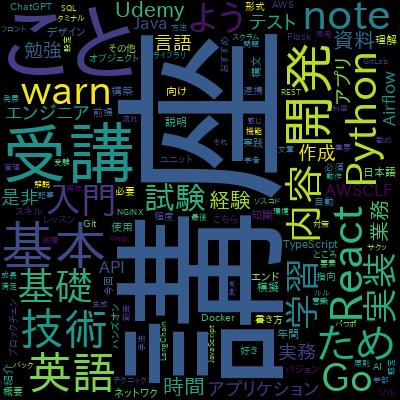
本コースの特徴
本コースの特徴を単語単位でまとめました。以下の単語が気になる方は、ぜひ本講座の受講をオススメします。
受講者の感想
本講座を受講した皆さんの感想を以下にまとめます。
レビューの一覧
・新入社員に向けて私が3年間で受講したUdemyの講座を紹介する[2024-05-29に投稿]
他にオススメな関連講座のランキング