【評判】GCP Professional Security Operations Engineer Practice Exams
-

-
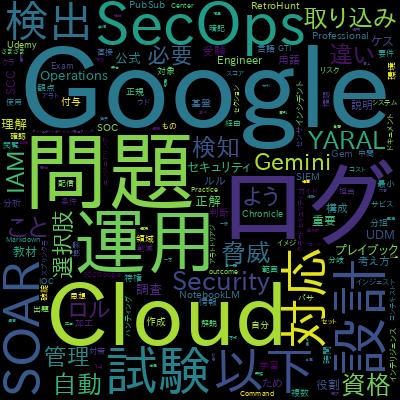 本コースの特徴
 -
 受講生の声
受講生の声
講座情報
- ・講師名:Priya Dw | AI, Cloud & Security Practice Exam Architect | CertShield(詳しい経歴はこちら)
- ・作成日:2025-10-19
- ・レクチャー数:0
- ・週間:0記事
- ・月間:0記事
- ・年間:1記事
- ・全期間:1記事
レビュー数
レビュー数の推移
本講座のレビューに関して記載された記事数の「直近6カ月の推移」を以下のグラフにまとめました。
| Month | Progress |
|---|---|
| 5月 | |
| 6月 | |
| 7月 | 1 |
| 8月 | |
| 9月 | |
| 10月 |
学習内容
Design and evaluate detection rules using YARA-L, SecOps Risk Analytics, and threat intelligence to reduce false positives.
Hunt for threats across logs, endpoints, and entity behavior using Google SecOps, Security Command Center, and BigQuery.
Contain, investigate, and scope security incidents using the SecOps SIEM, SOAR, and the case management lifecycle.
Build and automate incident response playbooks that select the right integrations and steps for a given threat.
Configure platform access, log ingestion, and data normalization across Google SecOps and Security Command Center.
Complete full-length, timed mock exams and recognize exam traps using CertShield’s 11-part answer-explanation framework.
詳細
Course Update Audit Trail
Oct 2026 | Course Refreshed: 11-Point Learning Framework with Domain-Specific Questions | All Brand New Practice Tests
Sep 2026 | Course fully refreshed for the current exam guidelines
JAN 2026 | Course Reviewed
Updated Nov/2025: New Practice Test-4 Added
***
Prepare for the Professional Security Operations Engineer certification with full-length, scenario-based practice exams built directly around Google's official exam guide. This course helps SOC analysts, detection engineers, and security architects pressure-test real SecOps skills — threat hunting, detection engineering, incident response, and observability — before they sit the actual exam.
Build Exam-Ready Security Operations Skills on Google Cloud
Configure telemetry, access, and data ingestion for Google SecOps and Security Command Center
Hunt for threats across logs, endpoints, and entity behavior using real investigative techniques
Design detection rules using YARA-L, risk analytics, and threat intelligence
Contain and investigate incidents using SecOps SIEM, SOAR, and case management workflows
Build response playbooks and automate the right steps for a given threat
Monitor security operations health with dashboards, metrics, and alerting
These mock exams mirror the actual Professional Security Operations Engineer exam, not a generic cybersecurity trivia quiz.
The Professional Security Operations Engineer certification confirms your ability to detect, investigate, and respond to real security threats on Google Cloud — not just describe what a SIEM does in theory. It validates hands-on skill with Google Security Operations (SecOps), Security Command Center (SCC), and Google Threat Intelligence (GTI), the actual tools a working SOC team uses.
The exam runs 2 hours and includes 50 to 60 multiple-choice and multiple-select questions, available in English or Japanese. You can sit it online-proctored through Pearson VUE, or onsite at a Pearson VUE test center. Registration costs $200 USD plus applicable tax, and there's no formal prerequisite certification.
Google does recommend 3+ years of security industry experience, including at least one year working hands-on with Google Cloud security tooling specifically — a bar that puts this alongside Google's other Professional-level certifications rather than its more accessible Associate tier. If you already work in a SOC or detection-engineering role, this is squarely aimed at formalizing that experience.
Where this certification fits your career. Google built this credential for working security operations professionals — SOC analysts moving into detection engineering, incident responders formalizing their skills, and security architects who want hands-on Google Cloud validation alongside their broader security background. It's a genuinely practitioner-level exam, not a conceptual overview.
A naming note worth knowing before you study. Google's SIEM/SOAR platform was originally branded "Chronicle," then rebranded to Google Security Operations (Google SecOps) — the exam guide itself never uses the word "Chronicle." Older study material still written around the Chronicle name can leave real gaps, since the current exam is built entirely on SecOps terminology.
How CertShield structures your practice. Each full-length mock exam is built section by section around Google's own official exam guide, so your study time maps directly onto how the real exam is weighted instead of spreading evenly across topics that don't carry equal weight. The guide breaks the exam into six sections:
Detection engineering (rules, risk analytics, threat intel) — approximately 22% of the exam, the largest section
Incident response (containment, playbooks, case management) — approximately 21%
Threat hunting (log queries, behavioral analysis, retrohunting) — approximately 19%
Platform operations (telemetry, access configuration) — approximately 14%
Data management (log ingestion, entity context) — approximately 14%
Observability (dashboards, health monitoring, alerting) — approximately 10%
Every practice question is scenario-based, the way the real exam is written. Instead of asking you to define a term, questions describe an active security situation — an anomalous login pattern that needs investigating, a detection rule generating too many false positives, an incident that needs scoping and containment — and ask what you'd do first.
That's the same reasoning style the actual Professional Security Operations Engineer exam uses, so you're rehearsing analyst judgment under time pressure, not memorizing console menus.
Detection engineering and incident response, together worth more than 40% of the exam, get the deepest sample-question coverage in this course: writing YARA-L detection rules, using SecOps Risk Analytics and entity graphs to cut false positives, scoping an incident across Logs Explorer and BigQuery, and designing SOAR playbooks that automate the right response steps without over-automating the wrong ones.
Threat hunting and platform/data questions carry real weight too — querying across logs for IOCs using Google Threat Intelligence, distinguishing event data from entity data during enrichment, configuring IAM and audit-log access for SCC and SecOps, and managing log ingestion and normalization costs as your environment scales.
Observability, the smallest section at roughly a tenth of the exam, still earns its own dedicated practice: building dashboards for detection and alert metrics in SecOps SOAR and SIEM, configuring threshold-based alerting through Cloud Monitoring, and spotting health issues — including silent source detection — before they become coverage gaps.
Why the explanations are different. A course that only marks your answer right or wrong doesn't teach you anything you can use on exam day — especially on multi-select questions, where several response steps look reasonable until you weigh scope, automation risk, and analyst workload together. Every CertShield question comes with an 11-part explanation:
Correct Answer — stated plainly, no ambiguity
Exam Reasoning Explanation — how Google expects you to think through the scenario
Key Exam Clues — the specific wording in the question that points to the answer
Why This Is Correct — the underlying detection or response logic
Why the Other Options Are Not the Best Fit — what makes each distractor plausible but wrong
Exam Trap — the specific mistake candidates commonly make on this type of question
Foundation Concept — the SecOps fundamental behind the scenario
Real-World Connection — how this maps onto real SOC and incident-response work
Memory Hook — a short mnemonic for recalling it under exam pressure
30-Second Exam Takeaway — the one-line summary if you're reviewing quickly
Official References — where the concept is documented for further reading
That depth is what separates genuine exam prep from a pile of unexplained sample questions — you finish each practice test understanding why an answer is right, not just that it was marked correct. On multi-select incident-response items specifically, the "Why the Other Options Are Not the Best Fit" breakdown does the real work, showing which response steps are wrong outright versus which are simply out of sequence.
What you walk away with. By working through full-length practice exams covering every domain, plus explanations that show the reasoning behind each correct and incorrect option, you'll go into the real Professional Security Operations Engineer exam having already handled its toughest detection-and-response scenarios — not guessing at what Google's own domain weighting means in practice.
Whether you're a SOC analyst formalizing your skills, a detection engineer moving into a more senior role, or a security architect adding a hands-on Google Cloud credential to your background, these mock tests are built to get you exam-ready, not just familiar with the tooling.
Practice at the pace the exam actually demands. With 50 to 60 questions in a 2-hour window, pacing matters alongside knowledge. Working through full-length, timed mock exams — rather than scattered sample questions — is how you find out whether your incident-response instincts hold up once the clock is running.
本コースの特徴
本コースの特徴を単語単位でまとめました。以下の単語が気になる方は、ぜひ本講座の受講をオススメします。
受講者の感想
本講座を受講した皆さんの感想を以下にまとめます。
レビューの一覧
・Google Cloud Professional Security Operations Engineerに合格しました[2026-07-02に投稿]
他にオススメな関連講座のランキング